Safety Tips for Bike Riding in Kashmir (Weather + Road Conditions)
Kashmir offers some of the most breathtaking and challenging motorcycling routes in the world and Riding a motorbike through Kashmir is a dream for many. From winding mountain roads to valleys surrounded by snow-capped peaks, the experience is unforgettable. But let’s be honest mountain riding in Jammu and Kashmir is different. It’s not just about how well you ride, it’s about knowing when to ride and what to expect from the terrain.
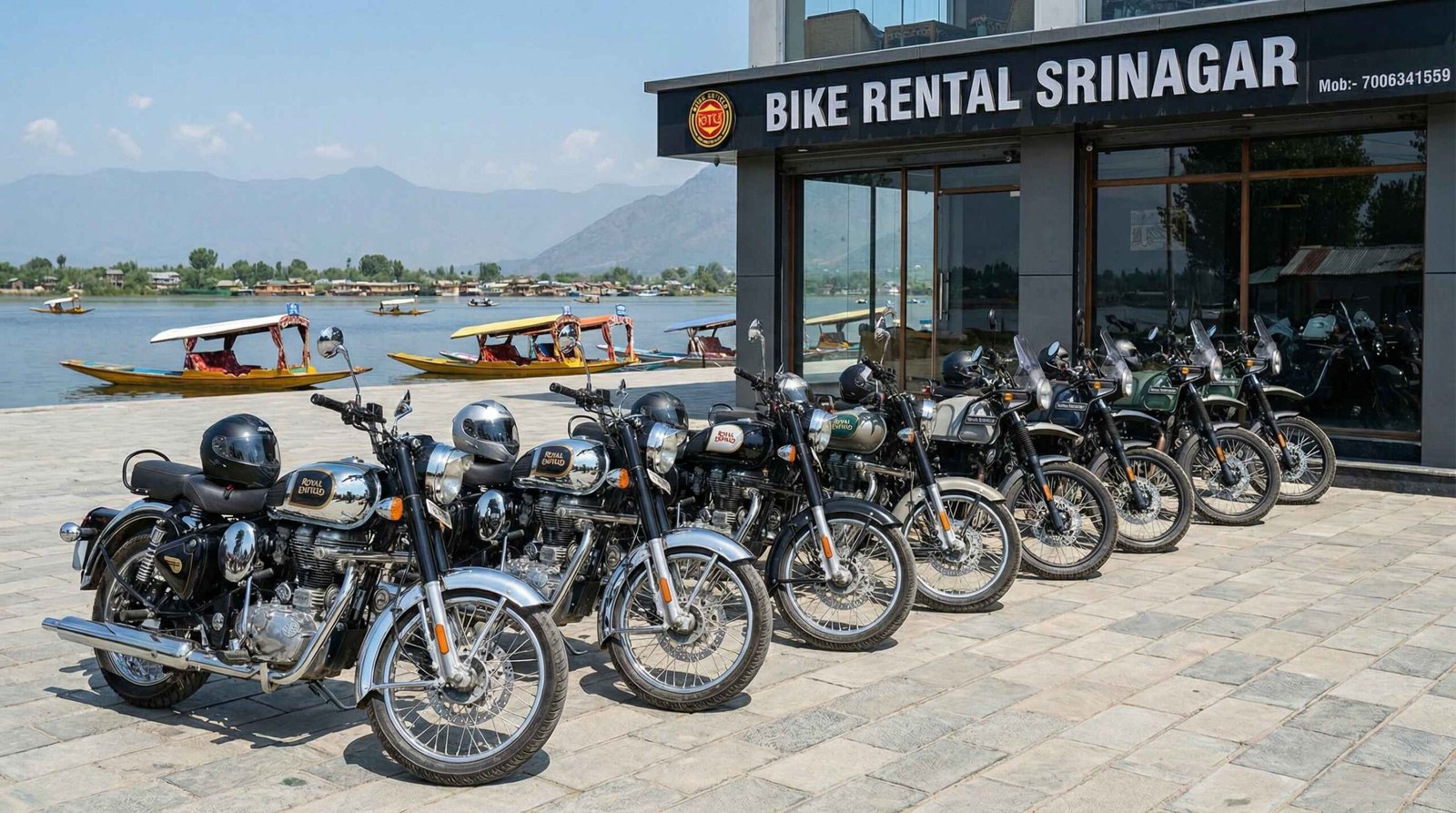
At Bike Rental Srinagar, we don’t just rent bikes we want you to return home with great stories, not scratches. This guide covers the real, on-ground safety realities of biking in Kashmir that most travel blogs won’t tell you.
Kashmir’s weather can change rapidly with sunny mornings, sudden rain showers and foggy evenings are common. Understanding the climate will help you plan your ride safely.
Check Forecasts Daily: Before starting your ride each day, check the local weather forecast. Pay special attention to forecasts for high-altitude passes and remote areas, as conditions there can differ drastically from the main cities like Srinagar.
Understand Seasonal Variations:
Spring & Summer (April – June): This is the golden window. Roads are dry, snow is cleared from Zojila Pass and grip is excellent. The only risk is sunburn and occasional dehydration.
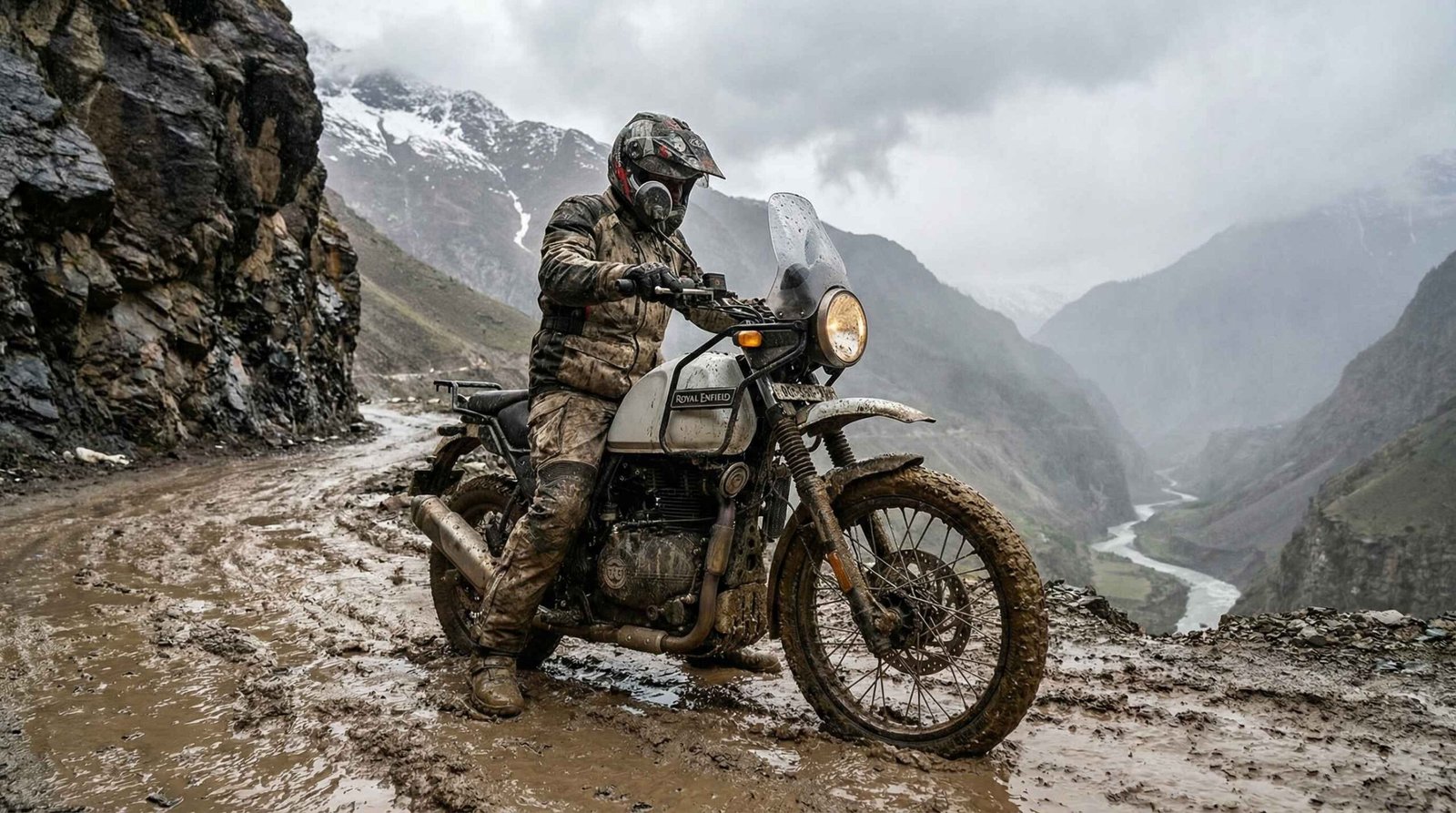
Monsoon (July – August): The Jammu-Srinagar highway often faces landslides. Locally, roads to Pahalgam can get slushy. Wet tarmac on mountain curves reduces traction significantly.
Winter (November – March): Be aware of the Black Ice. A thin invisible layer of ice that forms on roads, especially early morning and late evening. The road from Tangmarg to Gulmarg is strictly regulated in winter. often, only vehicles with anti-skid chains are allowed. Two-wheelers are frequently stopped by police for safety reasons during heavy snow.
3. Gear for All Conditions
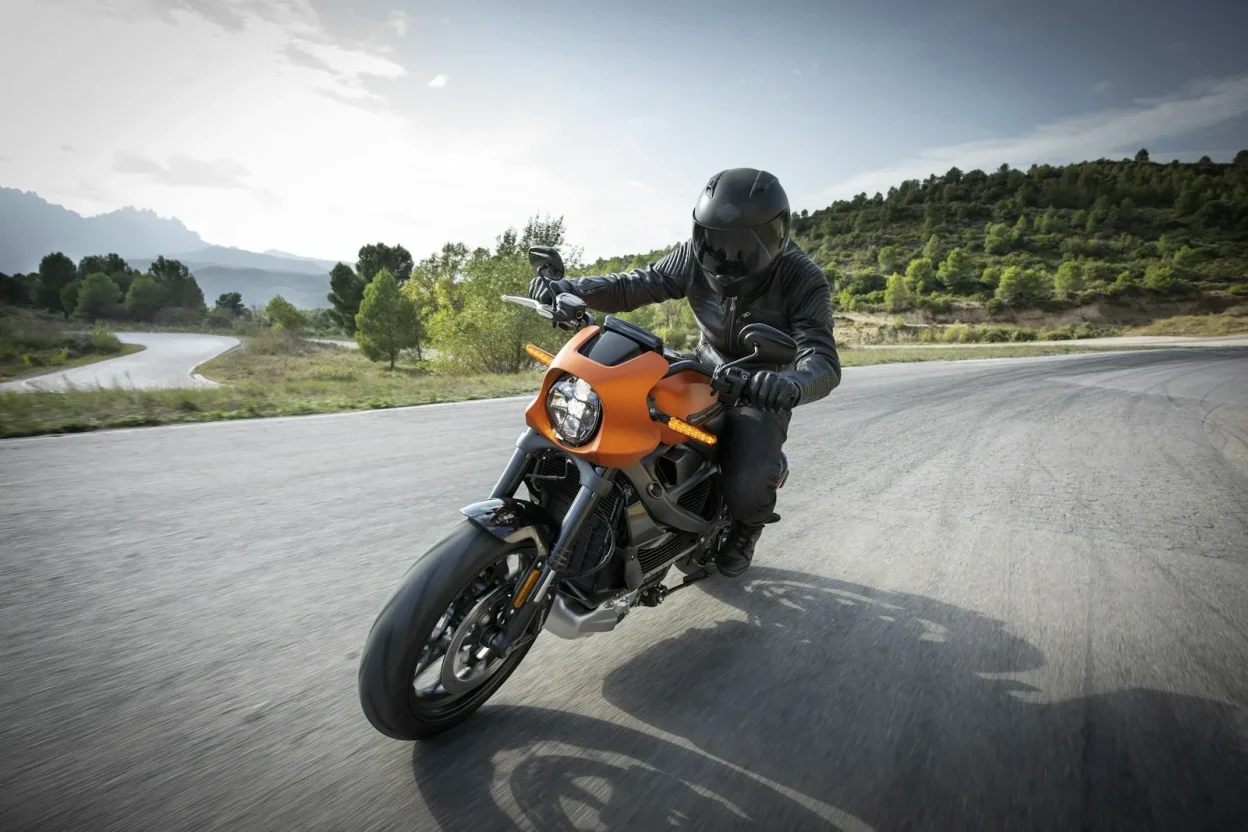
Helmet: A full-face helmet is non-negotiable. The wind noise on highways can be deafening and fatiguing without one.
Layered Clothing: Dress in layers. This allows you to easily adjust to temperature changes throughout the day, from cold mornings to warm afternoons.
Waterproof Outerwear: A high-quality, waterproof jacket and pants are non-negotiable. They protect against sudden rain or snow and also act as a wind barrier.
Thermal Protection: Carry thermal innerwear, especially for early morning rides or when crossing high passes.
Gloves: Waterproof and insulated gloves are crucial for maintaining hand dexterity. A balaclava helps retain body heat and protects your face from cold wind.
Gum Boots (For Water Crossings): If you are heading to Ladakh or crossing streams (nallahs), standard shoes will get wet and stay wet.
4. Road Conditions: The “Black Spots” to Watch
Zojila Pass (Srinagar-Leh Route): The infamous “Zojila slush” is real. Melting snow creates deep mud tracks. Keep your bike in a lower gear and maintain momentum; stopping in the slush makes it hard to start again.
Razdan Pass (Gurez Route): This is a high-altitude pass with broken patches. It is desolate, so a puncture here means a long wait. Ensure your puncture kit is stocked.
Srinagar City Traffic: Unlike the mountains, the city has unpredictable traffic. Be wary of pedestrians and erratic autorickshaws near Dal Gate and Lal Chowk.
5. Watch Out for the “Sumo” Factor (Local Traffic)
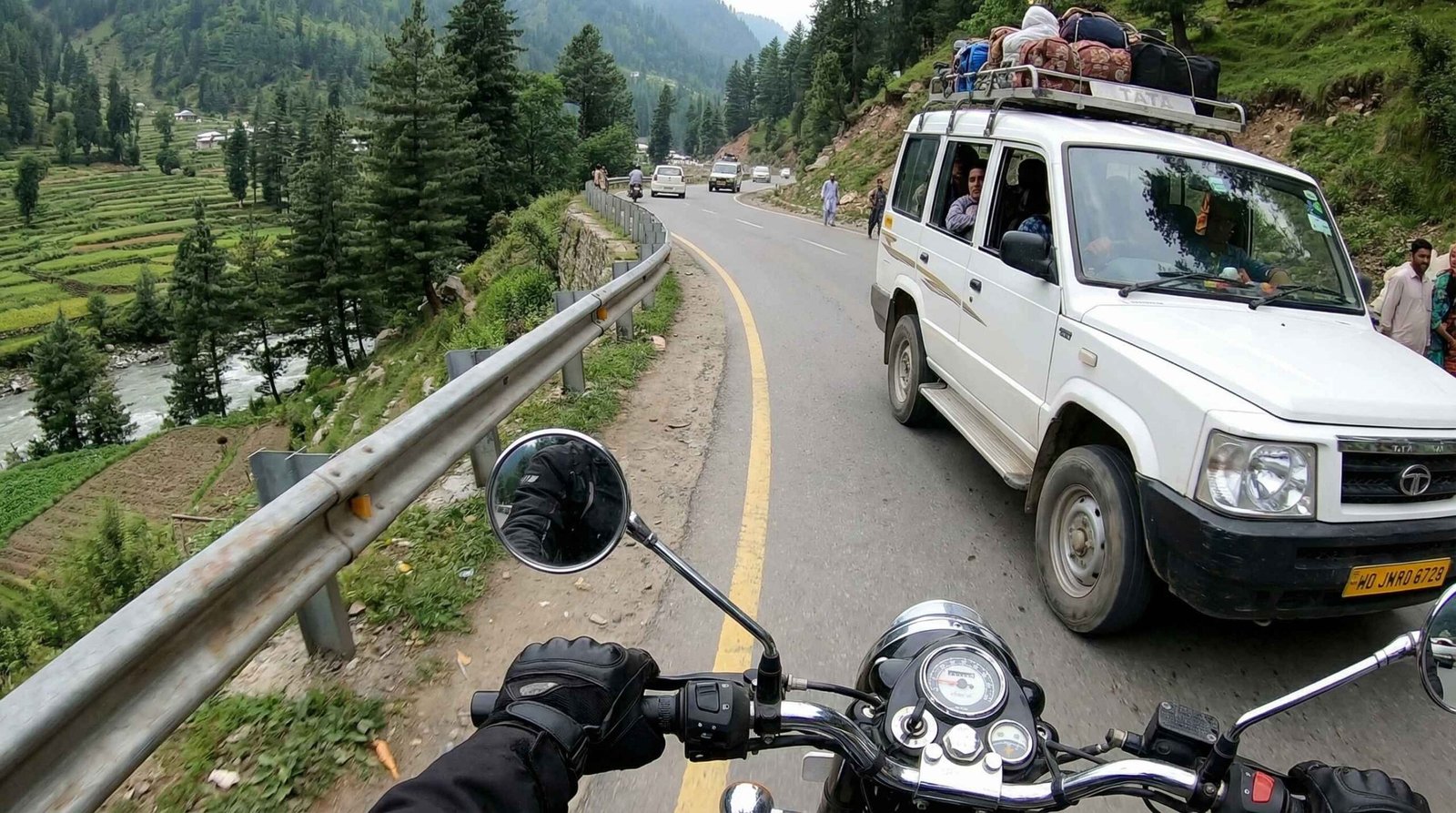
If you ask any biker who has ridden in Kashmir, they will mention the local shared taxis (Sumos, Taveras).
The Reality: These drivers are experts who drive these roads daily, meaning they drive fast. They often overtake on blind curves because they know the road memory.
Your Strategy:Never compete. If a Sumo honks behind you, give way immediately. Do not try to race them. Keep to the left and let the “locals” pass.
The “Blind Curve” Rule: On the Srinagar-Leh highway, never overtake on a turn. Incoming trucks often use the full width of the road to navigate tight hairpins.
6. Army Checkpoints: Be Ready, Don’t Be Scared
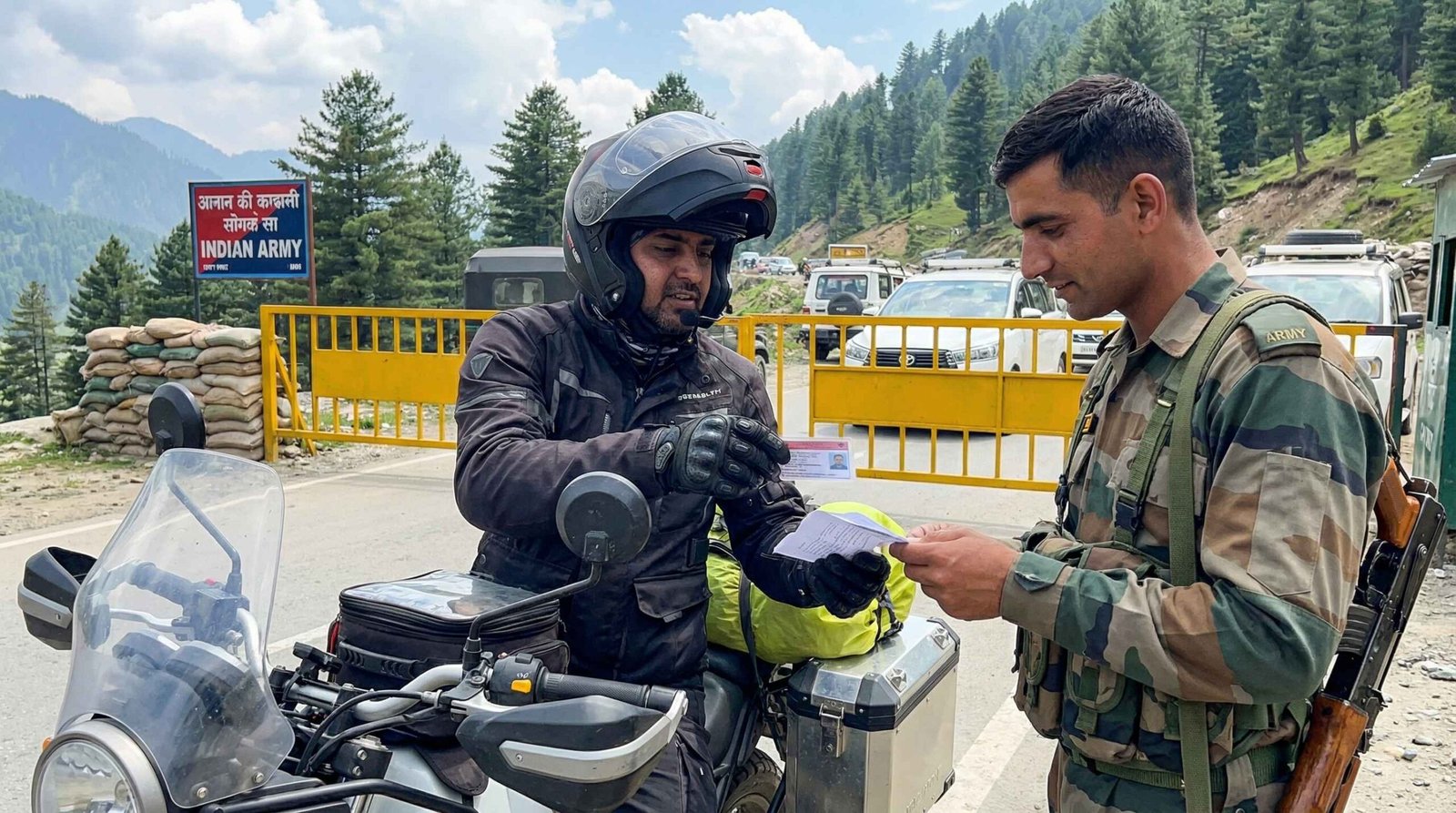
You will cross multiple checkpoints, especially towards Ladkah, Gurez, or border areas like Keran.
Procedure: It is standard protocol. You will be asked to show ID and sometimes register your vehicle number.
Pro Tip: Do not bury your ID at the bottom of your bag. Keep your Aadhaar/Passport and Bike Rental Agreement in a tank bag or an easily accessible jacket pocket. It saves time for you and the soldiers
7. Essential Bike Checks Before Riding
Always inspect the bike before starting a trip.
Checklist:
✔ Brake condition
✔ Tyre pressure & tread
✔ Headlights & brake lights
✔ Engine oil
✔ Chain lubrication
✔ Horn
✔ Fuel level (fuel pumps are limited in high-altitude areas)
8. What to Do During an Emergency
Emergency Tips:
Save important numbers: local police, bike rental provider, medical emergency services
Keep a small first-aid kit
Carry portable inflator and puncture kit
Inform someone about your travel route
During landslides: Do not stop near cliffs or edges
9. Fuel, Food & Phone Network Tips in Kashmir
Fuel
Major towns have petrol pumps
Carry extra fuel only if going towards Ladakh or remote areas
Food
Plenty of dhabas and restaurants along tourist routes
Remote routes may have fewer options
Mobile Network
Jio and Airtel work best in major areas
Connectivity drops in high mountains
Not Sure Which Bike Suits Your Route?
Planning a trip to Ladakh or just sticking to Srinagar? The right bike makes all the difference. If you are confused about whether to pick a Himalayan or a Classic 350 for your specific itinerary, let us help.
Talk to our local experts today for a free route consultation and bike recommendation.
📞 Call/WhatsApp Us for a Free Consultation: +91-7006341559
FAQ’s
Is it safe to ride a bike in Kashmir?
Which month is best for bike riding in Kashmir?
Are there fuel stations on all routes?
Can beginners ride bikes to places like Gulmarg or Sonmarg?
What is the best time of day to start riding in Kashmir?
Is it safe to ride a bike solo in Kashmir?
What should I do if I encounter a road closure due to a landslide?
What is the recommended speed limit on mountain roads?
What kind of bike is best for a Kashmir trip?
Is it safe for solo female riders to rent a bike in Kashmir?
Can I ride a Scooty (Scooter) to Ladakh or Gulmarg
What documents do I need to carry for the bike?
What happens if the bike breaks down in a remote area?